
WHARFSTONE HOTEL
Our Story
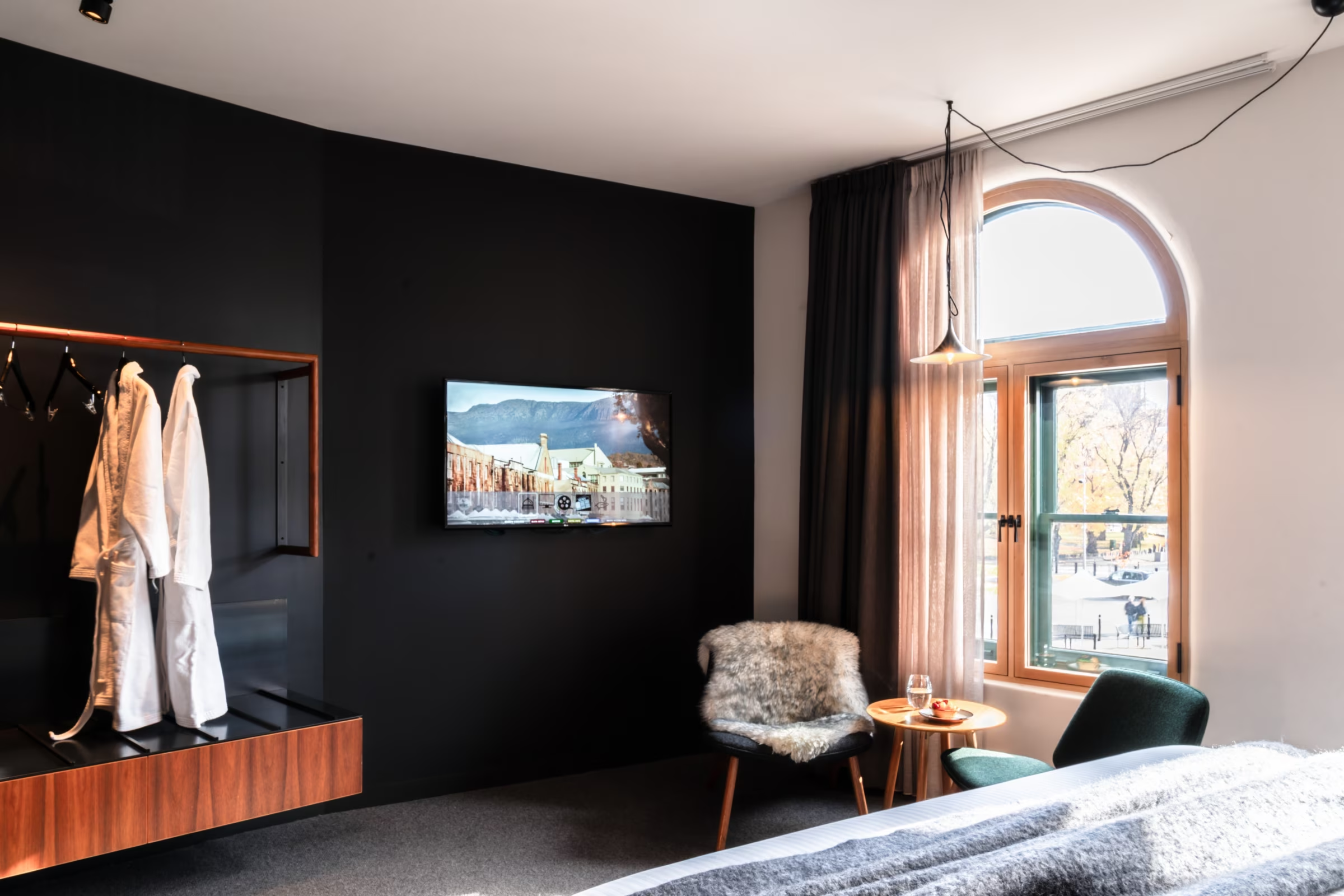
Two sandstone warehouses. Two centuries of history. One hotel.
25 SALAMANCA PLACE
WHARFSTONE 25
Number 25 went up in 1841, commissioned by merchant Bernard Walford as a sandstone-and-iron warehouse for goods coming off the Hobart docks. Its standout feature is the roofline - the original high, pitched timber rafters still stand intact above the Loft rooms. Iron fittings, exposed stone and warehouse-scale proportions carry through the rest of the building.
A Tasmanian architecture practice known for conservation and adaptive reuse was engaged to transform both buildings into hotel rooms while preserving everything that made them worth preserving. The brief was to add as little as possible.
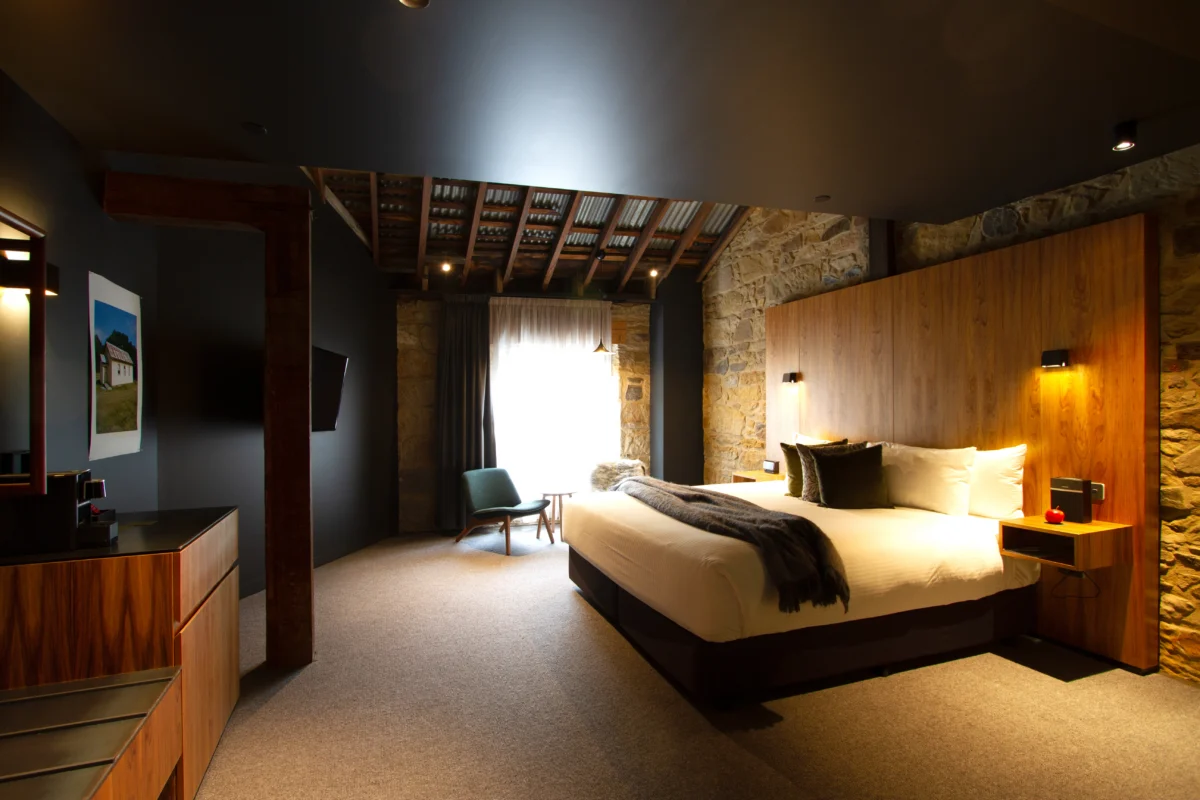
39 SALAMANCA PLACE
WHARFSTONE 39
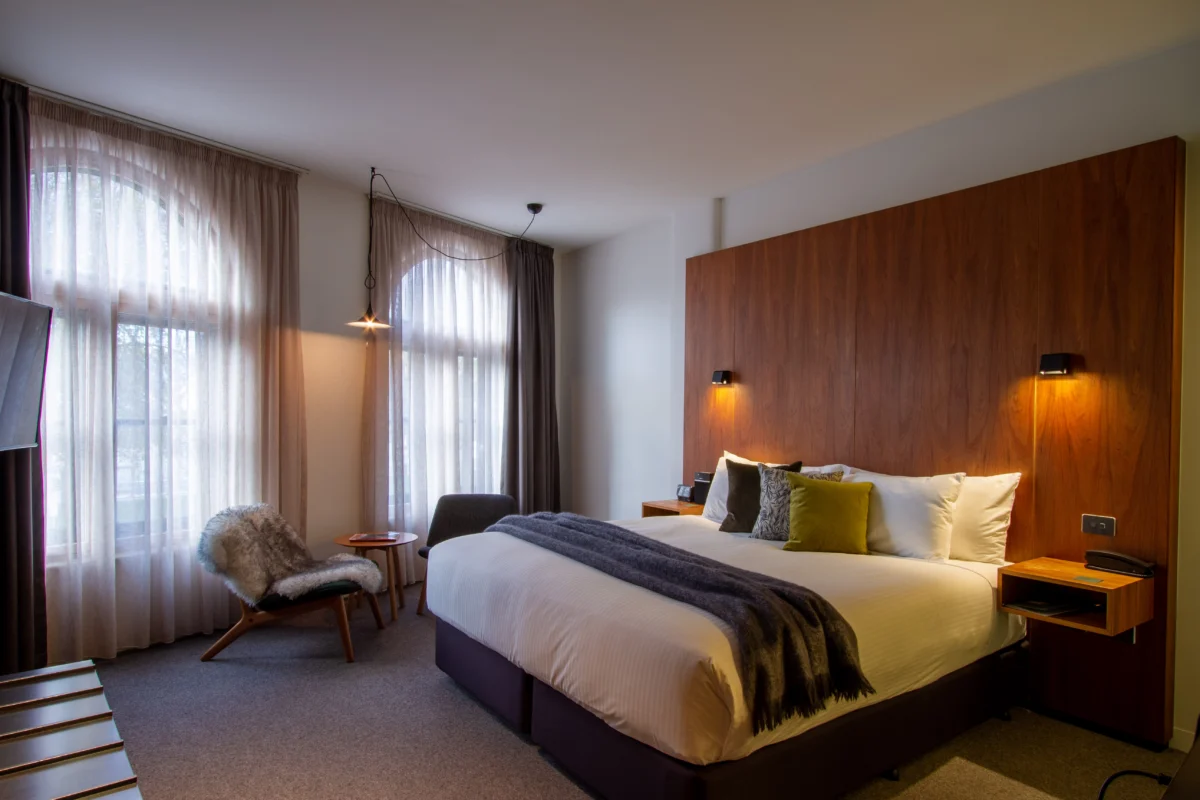
Number 39 is the elder of the two - raised in 1832 by Thomas Hewitt, nine years ahead of its neighbour, and true to the Georgian lines of Salamanca's earliest warehouses. Expect lower ceilings, a quieter feel and stone that's worn to a warmer patina with age. This building holds the Bower rooms along with the Grove Balcony, the only room in the hotel with its own outdoor balcony.
Only 75 metres and a short walk along Salamanca Place separate the two buildings, and while they share one identity, each keeps its own distinct character. Staying in the Loft at 25 and staying in the Bower at 39 are genuinely different ways of experiencing the same hotel.
COLLABORATORS
Made with local collaborators
Wharfstone Hotel was built through a deliberate process of collaboration with Tasmanian designers, conservation specialists and makers. The result reflects the island it is on.
Heritage Conservation Studio
Architecture & Interior Design
A Hobart-based practice with a focus on the conservation and adaptive reuse of historic buildings. Their brief: preserve what exists, add as little as possible.
Independent Brand Studio
Brand Identity & Visual Design
The studio behind the Wharfstone Hotel visual identity - the typography, wayfinding and the small numbered caption system that runs throughout the hotel.
Tasmanian Artists & Makers
Art, Ceramics & Objects
Works by Tasmanian artists and makers are installed throughout both buildings. The hotel carries a changing collection of contemporary Tasmanian craft and art.
RECOGNITION
Design that speaks quietly
Wharfstone Hotel wasn't designed to shout. Every choice - from the retained ironwork to the muted, tactile palette - was made to let two heritage sandstone warehouses do the talking.
The building and its identity were developed together, so the wayfinding, typography and small numbered captions found throughout the hotel feel like part of the architecture rather than an addition to it.
Ready to stay here?
Check availability or browse our six room types.